

Carpenter Bee Control
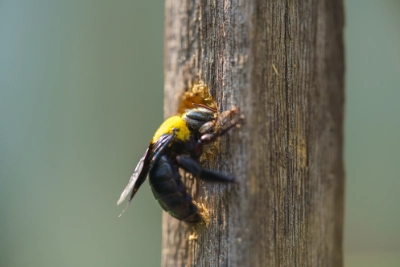
One of the first indicators of carpenter bee activity is the appearance of small, smooth, round holes in exterior wood. While these bees are typically calm and rarely sting, they may become defensive if disturbed. In warmer months, they are commonly seen hovering around wooden structures such as decks and rooflines. Despite their harmless reputation, they can still create significant structural concerns over time.
Inside the wood, carpenter bees carve out tunnels to form nesting chambers where eggs are deposited, and larvae grow. As this behavior continues season after season, the wood can become increasingly hollow, reducing its strength and stability. Over time, properties across Wisconsin may experience costly damage as the internal structure deteriorates.
The same nesting areas are frequently reused year after year, allowing damage to accumulate gradually. Since early activity is often difficult to detect, professional carpenter bee control from Wil-Kil Pest Control is often the most effective way to prevent long-term issues and protect homes in Wisconsin.
Carpenter Bee Identification Tips
Carpenter bees can be distinguished from other bees by several noticeable physical traits. Their larger, sturdier bodies, distinct coloration, and smooth, glossy, nearly hairless appearance make them easy to recognize around homes and wooden structures. Below are some key identification tips for spotting carpenter bees:
- Body Color: Carpenter bees typically display a subtle metallic sheen with hints of blue, green, or purple. In contrast, regular bees usually have softer golden and black striping that appears less shiny and less reflective.
- Size and Shape: Carpenter bees are generally larger and more heavily built, with a thick, sturdy body. Regular bees are typically smaller, slimmer, and lighter in overall structure.
- Abdomen Texture: Carpenter bees have a smooth, glossy black abdomen with very little hair. Regular bees, however, are covered in fine hairs that give their abdomen a softer, more textured appearance.
- Thorax Coloring: Both carpenter bees and regular bees have fuzzy thoraxes, but carpenter bees tend to display a brighter, more noticeable yellow coloration in this area that stands out more clearly.
Carpenter Bees and Honey Bees Differences Explained
Carpenter bees are often confused with honey bees, but they belong to different species. Their behavior, nesting environments, and physical features all help set them apart. The most notable differences:
- Social Behavior: Carpenter bees are usually solitary insects and are most often observed alone or in small numbers. Regular bees, on the other hand, live in highly organized colonies that can contain thousands of individuals working together.
- Temperament: Carpenter bees may hover around people in a territorial way, but rarely sting. Regular bees are typically calm and will usually sting only when they feel threatened or disturbed.
- Nesting Habits: Carpenter bees create nests by boring into wood and forming tunnels within structural materials. In contrast, regular bees usually build nests in trees, underground burrows, wall cavities, or other protected spaces using wax combs.
- Pollination Role: Carpenter bees are generally less effective pollinators, while regular bees are important contributors to pollinating flowers, crops, and a wide variety of plant species.
Need a Pest Control Estimate?

Leave your information below and we’ll be in touch with a FREE quote!
During normal business hours. After hours calls will be returned the next business day.
Advantages of Using Wil-Kil Pest Control for Carpenter Bee Control
Homeowners throughout Wisconsin have access to many carpenter bee control services, and choosing us means working with knowledgeable experts focused on preventing damage to your home. Here are several advantages of selecting our extermination services:
- Fast Local Response: We focus on quick response times from nearby carpenter bee control professionals who can act promptly to limit damage before it worsens. Even brief delays may lead to more serious structural problems and higher repair costs, which we work to help prevent.
- Experienced Technicians: Our exterminators are highly trained in carpenter bee behavior and region-specific treatment methods. They are skilled in locating active nesting sites, recognizing seasonal activity patterns, and distinguishing between nesting behavior and territorial hovering to ensure precise and effective service.
- Transparent Communication: We provide a detailed assessment of carpenter bee activity along with a clear, step-by-step explanation of the treatment process. We also share practical prevention guidance to help reduce future wood damage and remain available throughout service to answer any questions.
- Easy Online Management: Our easy-to-use online system makes it simple to schedule appointments, handle payments, and track service updates. From beginning to end, your carpenter bee control experience is designed to be smooth, convenient, and stress-free.
- Customized Treatment Plans: Our carpenter bee control solutions are customized to fit the specific needs of your property. After a detailed inspection, we target active entry points, weakened wood areas, and potential nesting sites to eliminate current infestations and help reduce the chance of future activity.
A Look at Our Carpenter Bee Control Process
When signs of carpenter bee activity appear, many homeowners reach out to Wil-Kil Pest Control for support. Here’s how we resolve the issue with efficient removal and ongoing protection:
- Thorough Inspection: We perform a comprehensive, detailed inspection of your property to locate active carpenter bee entry points, along with other areas of concern. Our technicians watch for important indicators such as males hovering in defensive patterns, yellow staining or discoloration on wood, fine sawdust-like debris, and clean, precisely round entry holes. This evaluation helps us assess the level of activity and determine the most effective treatment approach.
- Advanced Treatment Methods: Our strategy focuses on directly treating active tunnels while eliminating developing insects inside the wood and strengthening vulnerable areas with protective applications. This method is designed to stop carpenter bee activity and minimize the risk of further structural damage.
- Ongoing Prevention Plan: Our prevention plan is intended to reduce the likelihood of carpenter bees returning in the future. We provide ongoing maintenance recommendations, suggest practical property adjustments, and share useful guidance to help reduce reinfestation risk and avoid costly repairs over time.
Professional Carpenter Bee Removal Services in Wisconsin
Many homeowners try to do-it-yourself carpenter bee treatments, but these efforts often fail when nests are widespread or difficult to locate. Carpenter bees can establish multiple hidden entry points, and any missed section can lead to reinfestation in Wisconsin, sometimes becoming more problematic over time. We have assisted many clients who first attempted self-treatment without success.
At Wil-Kil Pest Control, we offer complete removal services along with prevention-focused strategies to help limit future infestations. Professional treatment is strongly advised because carpenter bees can remain active in hidden nesting sites, allowing infestations in Wisconsin to continue. Our approach is designed to address both visible activity and concealed nesting areas.
Contact Wil-Kil Pest Control today to schedule prompt carpenter bee removal services from experienced experts.
Carpenter Bee Control FAQ Guide
Homeowners throughout the Wisconsin area have relied on us since 1924, helping us build a strong reputation as a trusted pest control provider through dependable carpenter bee removal services. Our goal is to safeguard homes from structural damage and expensive repairs caused by these pests.
With extensive real-world experience, we’ve developed a detailed understanding of carpenter bee behavior and are always available to share what we’ve learned. From early warning signs to future risk assessment, we’re here to assist you.
If you have questions, don’t hesitate to get in touch at your convenience.
Carpenter bee infestations rarely resolve without intervention. After a tunnel is created, it is commonly reused and expanded by future generations. Without treatment, activity usually continues and can worsen as more bees contribute to the damage.
Carpenter bees hovering near a structure, especially males, often signal nearby or hidden nesting activity. In many cases, females may already be tunneling into wood before visible signs appear. A professional inspection can help identify early activity before indicators like staining, sawdust, or entry holes become noticeable.
Over-the-counter sprays and foams are typically not enough to fully eliminate carpenter bees. Their nesting sites are often hidden deep in wood or spread across multiple locations, so missing even one tunnel can allow the infestation to continue or return. Professional treatments are designed to penetrate deeper for more complete and lasting control.


